
011 - Clinical Audits
Getting involved in audits - for medical students and junior doctors
Topics discussed in this post:
🧠Clinical audits
📚Revision card - Pain
🎥 Youtube video - History taking of Pain
Welcome!
If you're a returning reader, welcome back!
If you’re new, welcome! You can have a look at the previous posts so you don’t miss anything!
Clinical Audits
Why I chose this topic
From my interactions with medical students and junior doctors, I’ve noticed one of the most common recurring questions is “how can I get into audits?” “how do I choose an audit topic"?”
So I decided that it is something that I should write about in a way that I’d want someone to explain it to me when I was a beginner!
So, let’s dive in and learn about audits and how you can get involved in one!
What is a clinical audit?
Clinical audit = “A way to find out if healthcare is being provided in line with standards and lets care providers and patients know where their service is doing well, and where there could be improvements”. — NHS
Why is clinical audit important for me as a medical student/ junior doctor?
Audit is expected to be a continuous process for contributing to quality improvement.
The General Medical Council (GMC) state in the publication Good Medical Practice that all doctors are required to:
Take part in regular and systematic audit.
Take part in systems of quality assurance and quality improvement.
Respond constructively to the outcome of audit, appraisals and performance reviews, undertaking further training where necessary.
What is the audit cycle?
The process of an audit is divided into 5 official steps. These steps form a cycle and is only considered complete when all of the steps are performed.
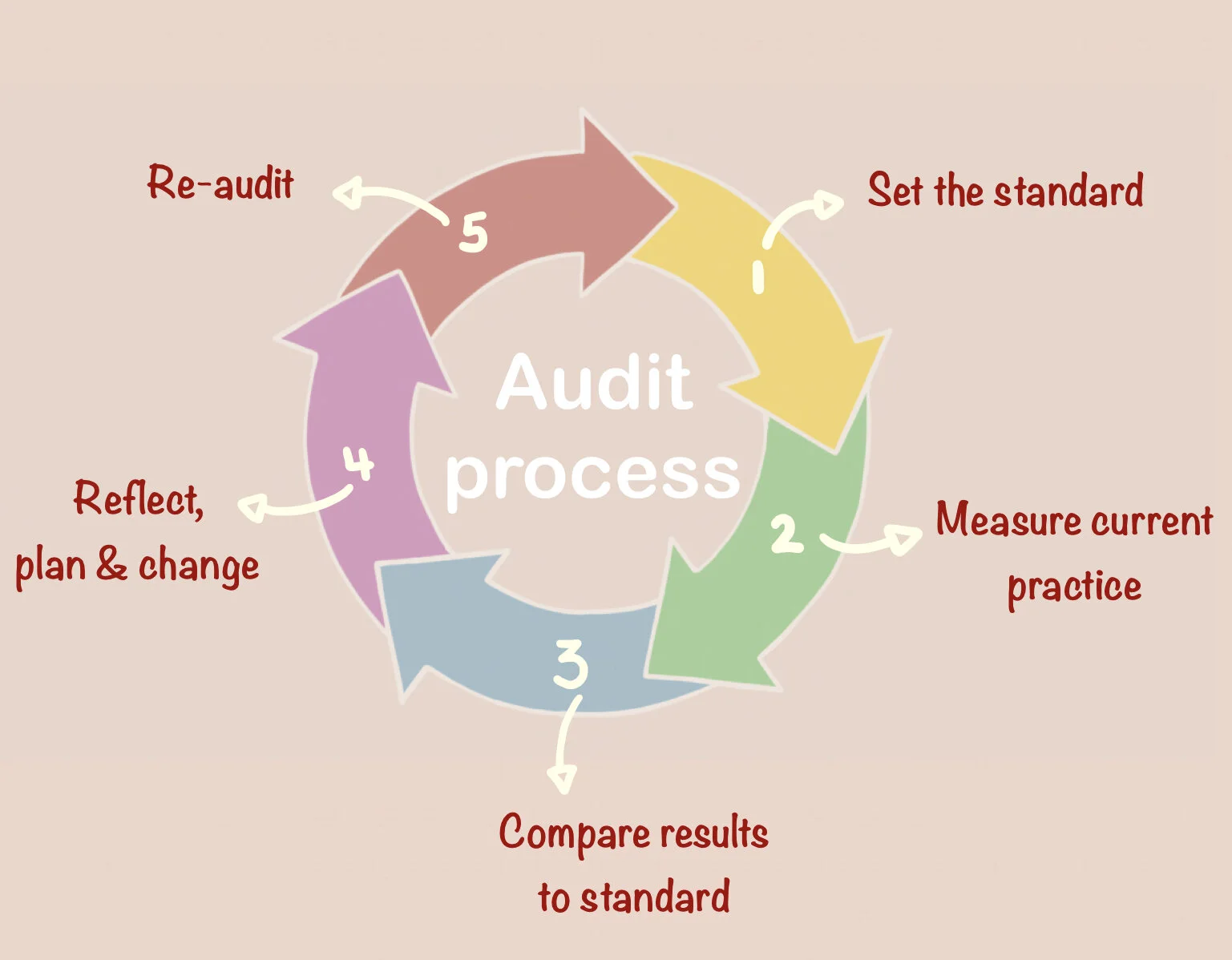
⬅️ Steps of the audit cycle process
Here is my step by step guide - how to get involved in an audit:
1- Find a topic
If you are already in your clinical years (or a junior doctor) this will be easier for you.
Choosing the topic of your audit is a very important step and must be given careful consideration. Check the current practice of the department you are in and see if there is anything that you think should be reviewed and compared to the national standard, for example.
It is worthwhile to find good colleagues who will help you in the brainstorming process and come up with good topics, especially when it is your first audit.
2- Find a good supervisor
Now that you have an idea what you want to audit, speak to a senior registrar or a consultant.
It is always good when you approach them after you have spent time brainstorming topics rather than go empty handed and ask for an audit. They are more likely to guide you and even give you a few ideas of their own.
3- Find a national standard
Now that you have an audit topic and a consultant, things will be easier from now onwards because you have an idea where you’re going with this.
Always find journal articles that did a similar audit and see which national standards they compared this with: these can include the following:
4- Materials and methods
This is where you figure out HOW you are going to collect data for your audit.
Where are you going to collect data from? (usually this is from the hospital patient records)
Where are you going to put the collected data? (this can be excel or even google sheets)
What is your period of study? (is this retrospective study or a prospective? how many months/weeks/days is this study period? — for example, you could be looking at a patient cohort over a 6-month period or a 4-moth period).
What is your inclusion criteria? (basically - what is your target patient? This can include a target gender, age, certain disease, certain operations, etc.)
What is your exclusion criteria? (Which patients do you NOT include in the study?
5- Analyse and discuss your data
After you have collected your data, have a look at the results.
Compare this to the national or international standard that you initially chose.
After analysis of your data, note down some discussion points.
6- Present your audit
Now that you have completed the data collection and analysed it, you can present it at your local audit meeting. From the local audit meeting (usually done monthly in the hospital) you will be asked questions about your audits such as your study limitations, what kind of changes (if needed) can be achieved from your audit, etc.
Then you can look at opportunities to present your audit at a national or international conference.
A few good examples of clinical audits can be found in the following websites:
New YouTube video!
This week’s YouTube video is about History Taking of Pain
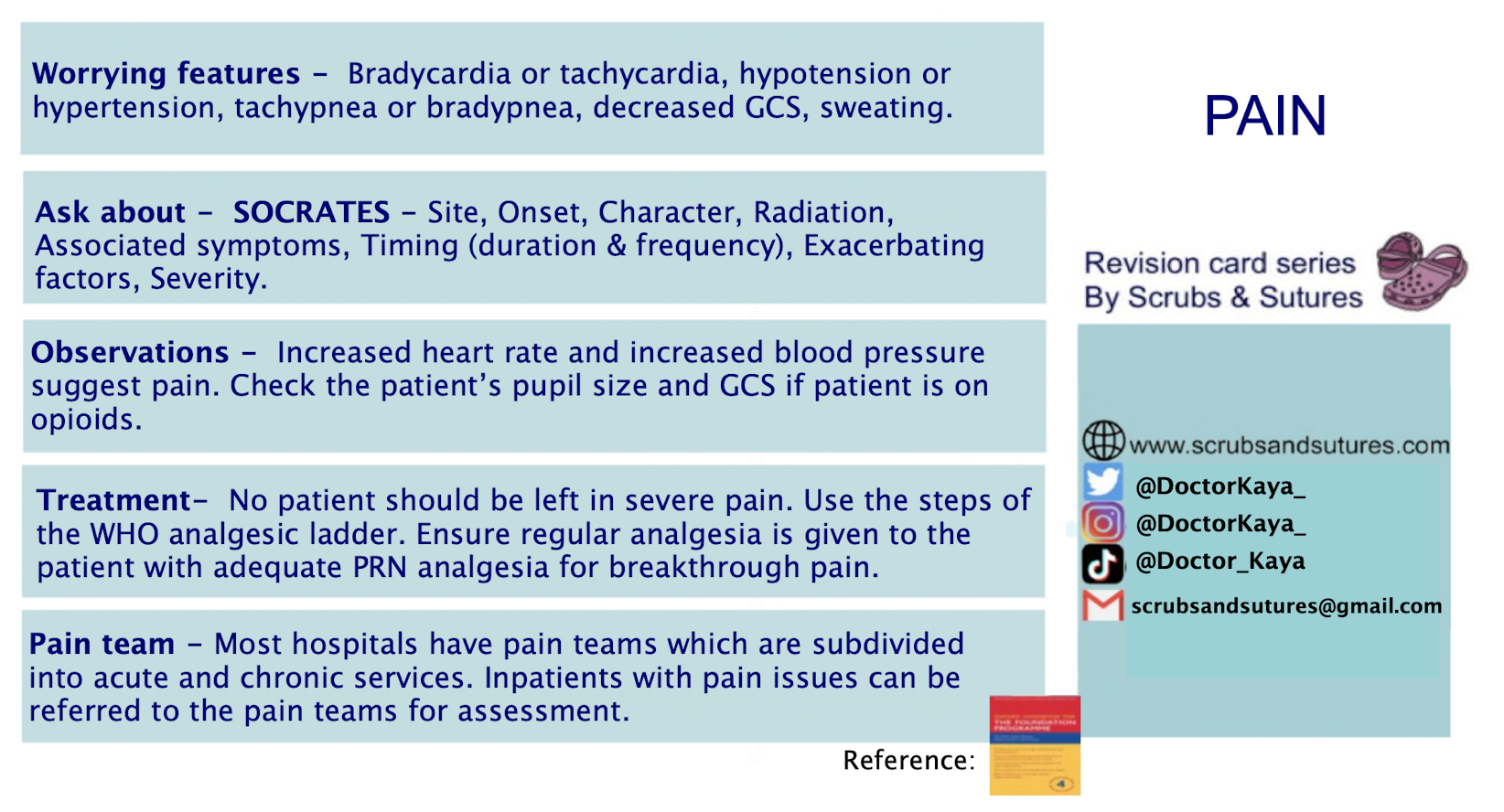
Revision card of the week: Pain
Do you have any specific topic that you want to read about next week?
You can always make suggestions as I plan to make this newsletter as useful to you as possible. Feel free to contact me at scrubsandsutures@gmail.com or on twitter and I will try to tailor the next one for you.
