
012 - Anatomy study tips
Topics discussed in this post:
🧠 Anatomy study tips
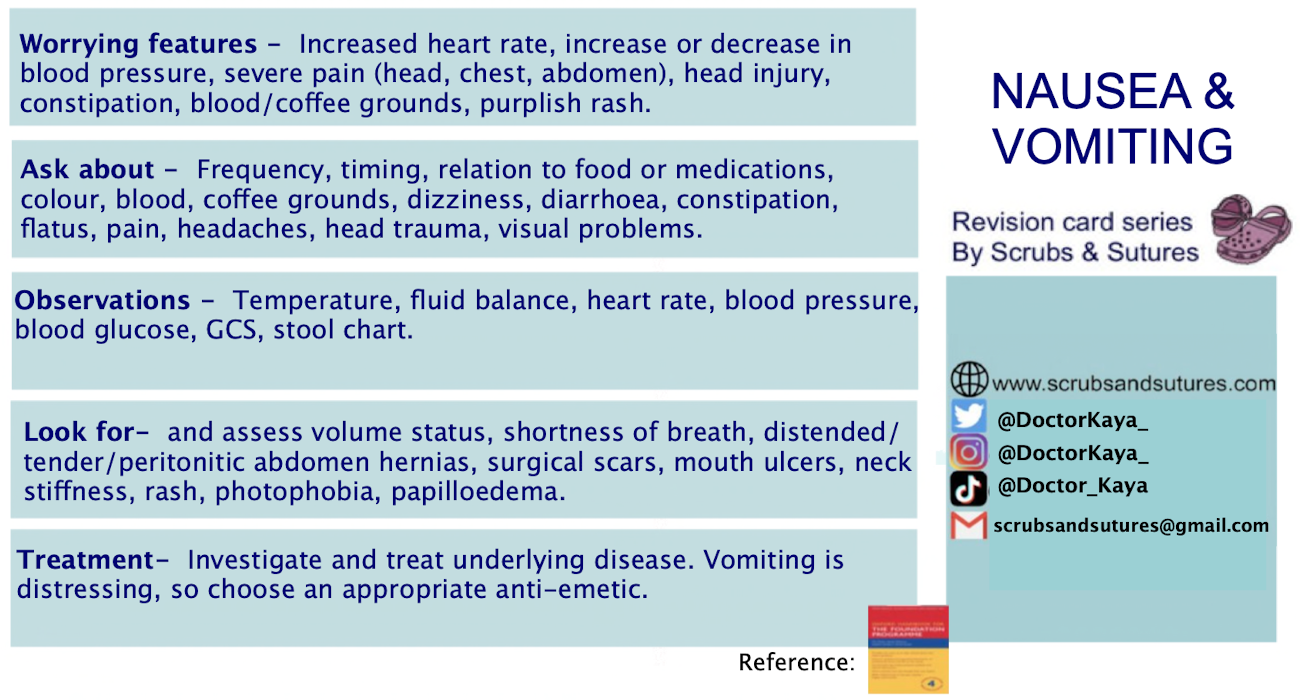
📚Revision card - Nausea & Vomiting
🎥 Youtube video - History taking: Past Medical History (PMH)
Welcome!
If you're a returning reader, welcome back!
If you’re new, welcome! You can have a look at the previous posts so you don’t miss anything!
Anatomy study tips
Anatomy is one of the first subjects medical students take in their first year of medicine. Some students see it as one of the hardest subjects they’ve had throughout medicine, while others sail through it. Personally, anatomy was one of my favourite most enjoyable subjects. It was not an easy subject, but I am a visual learner and having the chance to learn something by dissection of cadavers made a lasting impact on my education and career choices.
There are many things that you can do to make anatomy easier for you, here are some tips:
1- Start early
Anatomy is not one of the subjects you can easily cram in one night.
If you start early in your anatomy preparation, then you’re setting yourself up for success.
By giving yourself time, you’re ably to calmly prepare and spend time looking at pictures in textbooks or dissecting cadavers if your university has these facilities.
2- Repetition. Repetition. Repetition.
One of the important things is to read and revise your notes efficiently. Anatomy is full of lists for memorisation. You have to memorise things like boundaries of a triangle or the contents of a canal, the branches of an artery or even the structures that pass through foramina in the skull. Without repetition, these details can easily get mixed up and you’ll find yourself stuck at exam questions, trying to recall things you’ve read but haven’t revised. Spaced repetition is a safe way to go. The more you repeat a revision, the less likely you are to forget the information and the more likely you are to form long term memories.
3- Be creative
So you have to learn the boundaries and contents of something? Draw it!
My anatomy notebook was so full of labelled drawings and so colourful that I used to remember what each drawing looked like and what colours were in the pages. Draw the blood supply in your hands or colour the dermatome distribution in your foot. These simple things make a big difference later on in your memorisation and understanding, they make exams easier.
4- Know your basics
If you don’t know your basics, you’ll end up in trouble later on. The language in anatomy is not like in other modules. Where it is no longer front and back, it is anterior and posterior. Medial and lateral. Proximal and distal. Initially, this will feel like a lot to take it. But once you master these basics, the rest follows in a smoother manner.
5- Use the right resources
So your med school recommended a specific anatomy book? You don’t like it? change it! Anatomy is factual. The information is the same in the majority of books. Some books explain it better than others. Some books have better explanatory pictures. Don’t be afraid to experiment with different books and resources.
If you don’t like learning from books and find the process slower, find the appropriate videos that are in so many websites. Youtube is filled with them! If one video doesn’t explain it right, find another!(But please make sure that you’re using reliable channels from youtube).
6- Books I used in med school
Gray’s anatomy for students - This was my go-to textbook for making revision notes
Snell’s clinical anatomy by regions - A second resource for when the information for Gray’s anatomy needed a further clarification
Board review series: Gross anatomy - The book for the ultimate condensed anatomy notes (for when I had no time and needed to learn ASAP)
7- Video resources I used in med school
Acland’s Video Atlasof Human AnatomyAbsolutely loved this resource.
8- Ask for help
Remember to always ask for advice when you are stuck.
New YouTube video!
This week’s YouTube video is about History Taking - Past Medical History (PMH)
Revision card of the week: Nausea & Vomiting
Do you have any specific topic that you want to read about next week?
You can always make suggestions as I plan to make this newsletter as useful to you as possible. Feel free to contact me at scrubsandsutures@gmail.com or on twitter and I will try to tailor the next one for you.
